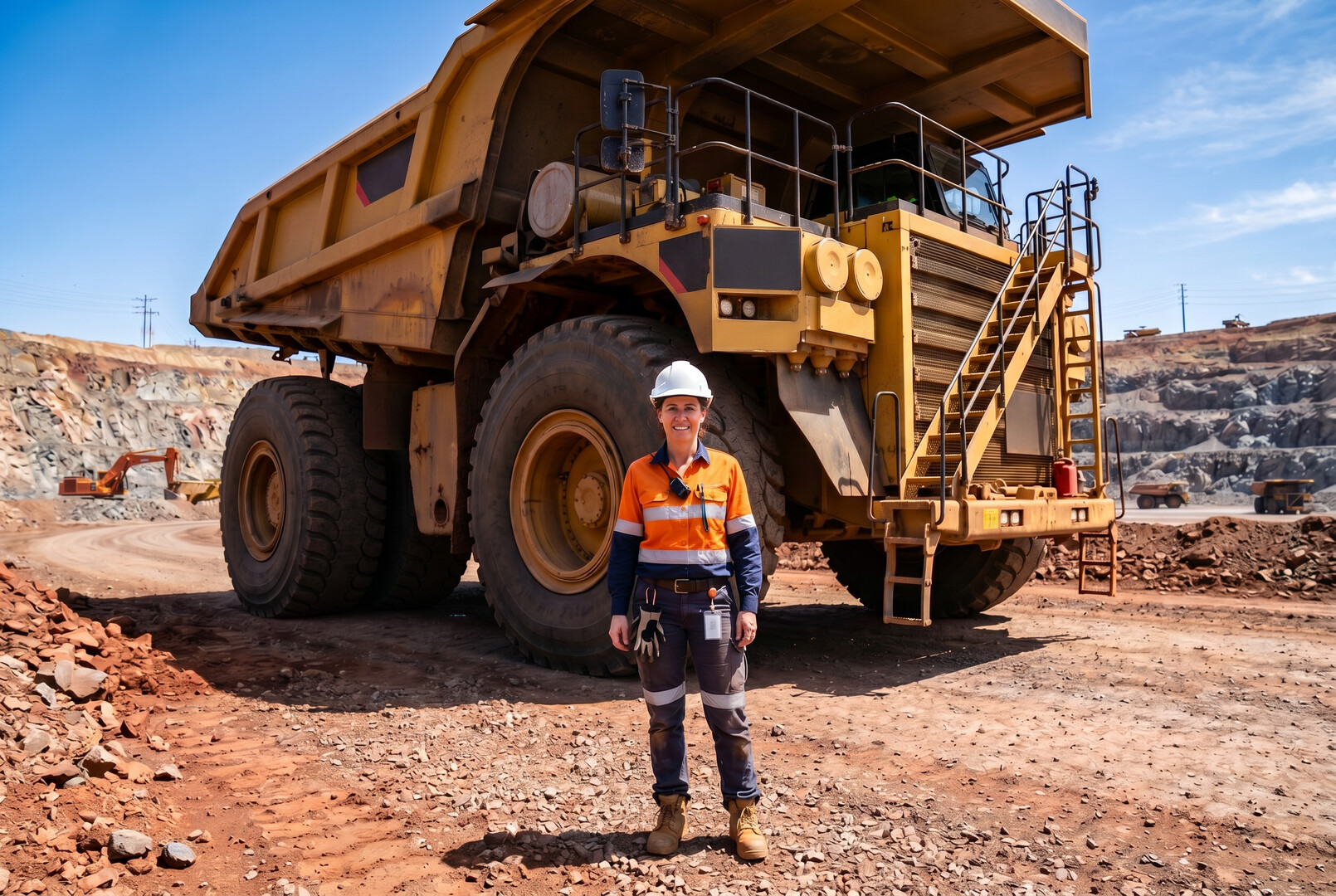
The image depicts a mining or construction site with a large, heavy-duty dump truck as the central object. In front of the truck, a worker dressed in high-visibility safety gear, including an orange and navy blue shirt, protective pants, sturdy boots
Machine Safety Australia will participate in the International Mining and Resources Conference (IMARC) in Sydney this October, bringing attention to a growing and often overlooked issue in Australian industry: the safety compliance of imported and installed industrial machinery. IMARC is Australia’s largest mining and resources conference, bringing together global leaders across mining, engineering, technology, investment, and safety innovation to explore the future of the sector and the technologies shaping it. Against this backdrop, Machine Safety Australia will use its presence at the event to highlight increasing concerns that many industrial operations may be relying on machinery that has not been fully assessed against Australian safety standards, including AS/NZS 4024 machine safety requirements.
Rising concerns over imported machinery compliance gaps
The organisation says the issue is becoming more urgent as Australian manufacturers continue to adopt globally sourced equipment to improve productivity and reduce costs, often without fully understanding the safety implications or compliance gaps that can arise during importation and installation.
Machine Safety Australia General Manager, [Name], said the company’s focus at IMARC is to bring practical attention to the hidden risks within modern industrial environments.
“Many businesses assume that machinery imported from overseas is automatically compliant with Australian standards, but that is not always the case,” the General Manager said.
“In practice, we are seeing gaps in risk assessment, guarding, and functional safety verification that only become visible once equipment is in operation.”
Automation accelerating risk complexity across industry
The company will also highlight the increasing complexity of machine safety in an era of automation, where robotics, AI-enabled systems, and integrated production lines require more advanced verification processes than traditional equipment.
“Industrial automation is accelerating across Australia, but safety assurance processes are not always keeping pace,” the General Manager said. “That creates risks that are often systemic rather than visible.”
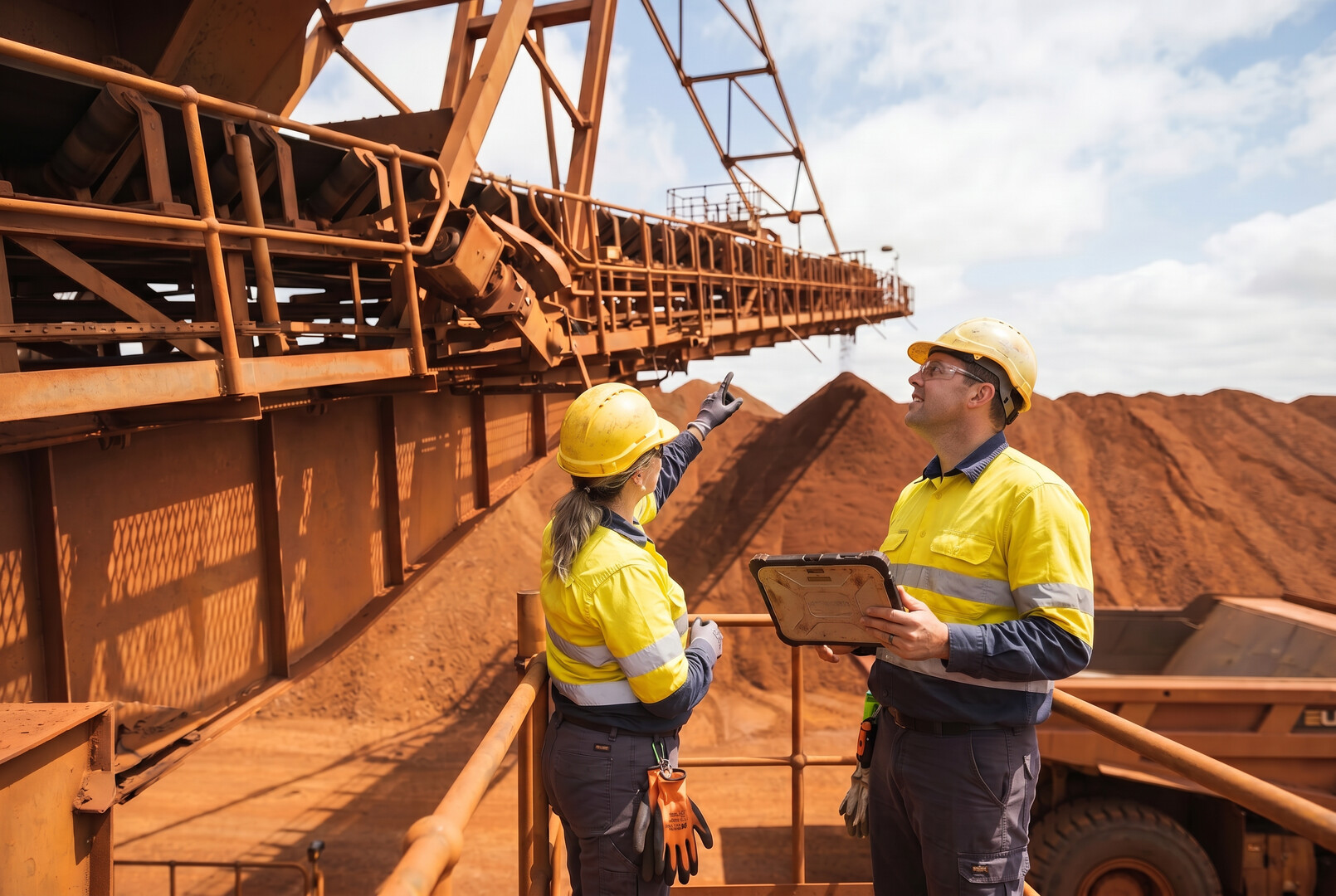
The image depicts two workers at a mining or industrial site, engaged in a discussion or inspection. Both individuals wear high-visibility yellow and navy safety uniforms and yellow hard hats, adhering to typical safety protocols. One worker holds a
The image depicts two workers at a mining or industrial site, engaged in a discussion or inspection. Both individuals wear high-visibility yellow and navy safety uniforms and yellow hard hats, adhering to typical safety protocols. One worker holds a
IMARC platform highlights safety, productivity and innovation balance
IMARC provides a platform for Machine Safety Australia to engage with mining operators, manufacturers, engineers, and regulators at a time when workplace health and safety compliance is under increasing scrutiny across high-risk industries.
With serious injury and fatality prevention remaining a key priority for regulators and industry alike, the organisation says independent machine safety assessment is becoming essential rather than optional for businesses operating complex or imported equipment.
Strengthening Australia’s approach to machine safety standards
Machine Safety Australia’s participation at IMARC reflects a broader industry conversation about how Australia can balance productivity, global supply chains, and technological adoption with robust safety standards that protect workers on the ground.