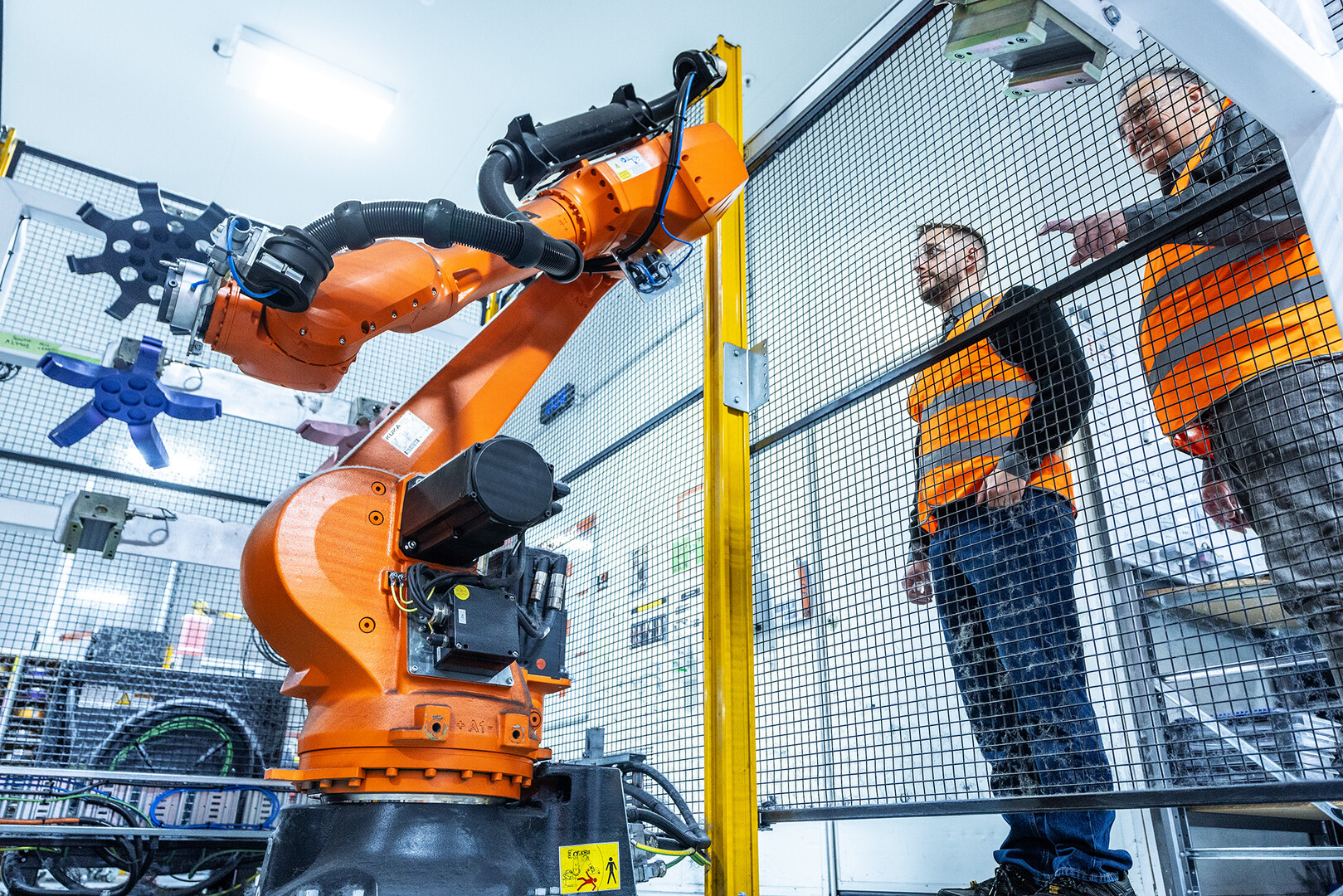
An industrial robotic arm operates within a safety enclosure while two workers observe from outside. The scene highlights industrial automation, machine safety, and human oversight in a modern manufacturing environment.
Australian manufacturing is entering a new phase of industrial automation as robotics, AI systems, and high-speed production lines become embedded across factory floors. While productivity is improving, machinery safety risks are becoming more complex and interconnected.
Safety embedded into production systems
Manufacturers are balancing higher output demands with tighter quality expectations and increased obligations to protect workers in highly automated environments.
Industry specialists such as Machine Safety Australia say safety is increasingly being integrated directly into machine design, automation systems, and production workflows rather than treated as a separate compliance layer.
Increasing system complexity across factories
Modern facilities rely on robotics, CNC systems, conveyor networks, and integrated control platforms, creating multiple interaction points between humans and machines. Safety systems are therefore shifting toward interlocks, guarding technologies, and real-time monitoring.
Regulatory frameworks such as AS/NZS 4024 Machinery Safety Standards and ISO 12100 Risk Assessment and Risk Reduction are reinforcing lifecycle-based safety expectations.
Legacy equipment modernisation accelerating
Older machinery is being progressively upgraded with modern safety controls, improved guarding, and validated functional safety systems.